
The False Identity Machinery
The Day of the JackalThis flow examines how The Jackal constructs, uses, and discards identities to stay ahead of national police systems.
increasing Bearing strength in each event
 decreasing
Bearing strength in each eventdecreasingLearning the Passport Weakness
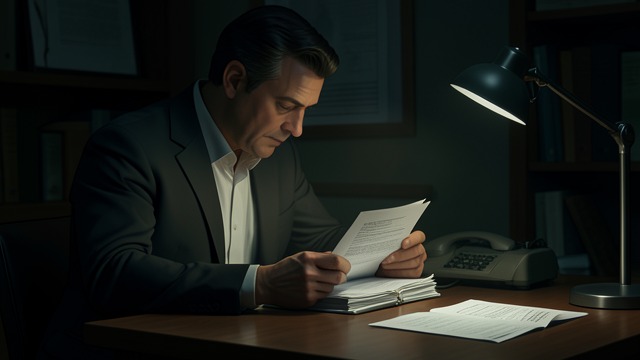
Learning the Passport Weakness
A borrowed past
The Jackal builds a British passport identity from a dead child’s records and a forged clerical reference. Ordinary procedures accept the application because officials have no reason to expect such a carefully constructed fraud.
Documents as camouflage
The false passport gives a coherent story, not merely a name. It allows The Jackal to travel as Alexander Duggan and to make his movements appear to belong to a legitimate British traveler.
The Duggan Appearance
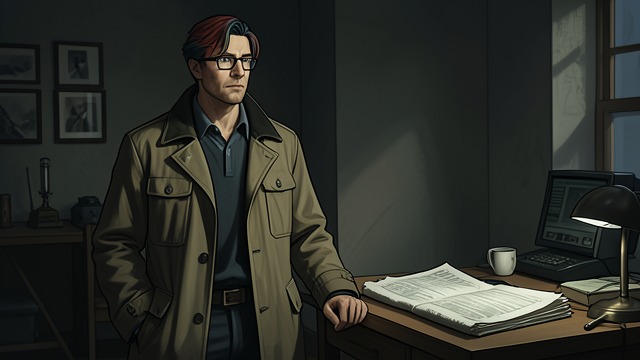
The Duggan Appearance
A face made plausible
The Jackal studies and imitates the appearance of travelers whose passports he has stolen. Clothing, hair dye, lenses, and posture complete the distinction between his real appearance and the identity on paper.
A temporary success
The Duggan identity passes routine checks at airports and borders. Its weakness is that the British police can investigate the underlying birth record and discover that the named person died as a child.
The Danish Pastor
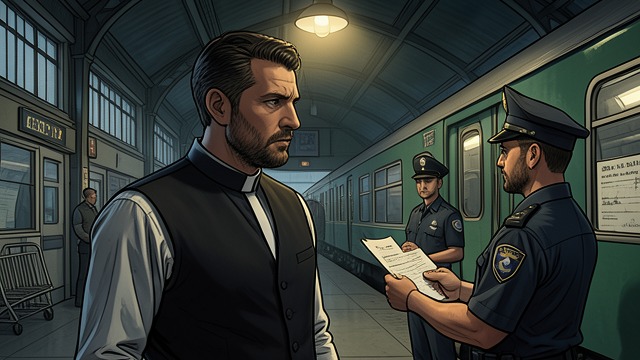
The Danish Pastor
A borrowed passport
After killing Colette, The Jackal changes his hair and clothes to resemble Pastor Per Jensen, whose passport he stole in London. He takes the train to Paris and presents himself as a harmless clergyman.
The disguise is traced
A lost-passport report leads Lebel to Jensen’s identity. The Jackal learns that police are checking Danish hotel registrations and abandons the persona before the search can close around him.
Marty Schulberg in Paris
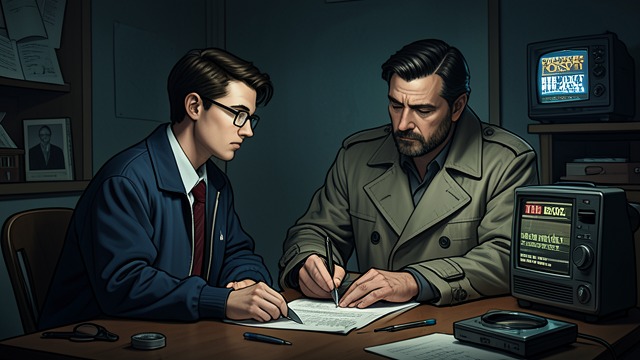
Marty Schulberg in Paris
A second transformation
The Jackal changes into the identity of an American student whose passport he stole at London Airport. He alters his hair color, clothing, glasses, and manner to make the new papers seem credible.
Safety through stereotype
He hides with Jules Bernard in a milieu where police officers are less likely to expect the violent assassin they seek. When the authorities broadcast Schulberg’s photograph, he kills Bernard and changes course again.
The Veteran’s Final Mask
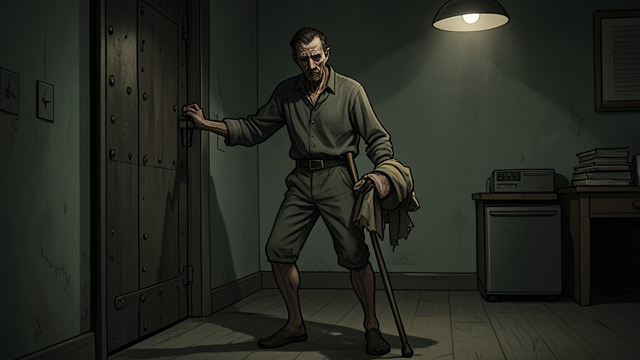
The Veteran’s Final Mask
Papers and performance
The Jackal adopts the identity of André Martin, a wounded French veteran, carrying forged papers and a display of medals. He manufactures signs of illness and physical disability to invite compassion rather than suspicion.
A disguise beyond the passport
The final identity works because it is embodied: the crutch, limp, heat-strained face, and modest request to pass all support one another. It gets him through the perimeter, but cannot protect him once Lebel understands what the crutch conceals.
July 1963
July to August 1963
August 21 to 22, 1963
August 22 to 24, 1963
August 25, 1963, afternoon
